





The Master Guide to Magnetic Hotplate Stirrers: Global Market Intelligence, Technical Analysis, Procurement Framework, Application Guidance, Troubleshooting, Maintenance, Buying Strategies

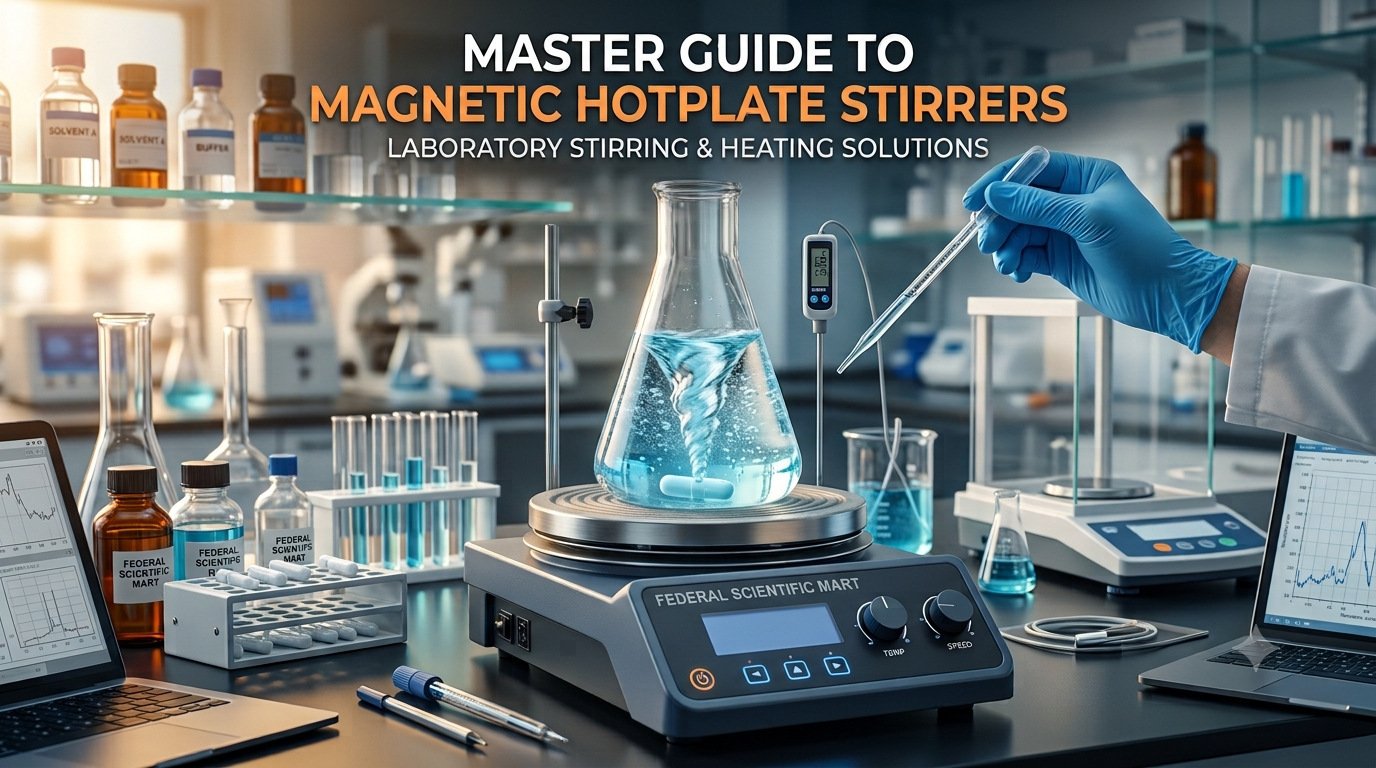
Magnetic hotplate stirrers are fundamental laboratory instruments that combine controlled heating with magnetic stirring to enable homogeneous mixing and precise temperature regulation of liquids. They are used extensively in organic synthesis, analytical chemistry, biochemistry, pharmaceutical quality control, microbiology, food testing, environmental analysis, education, and industrial process development. This ultimate, exhaustive master guide serves as a complete worldwide reference and user guidance document, addressing the needs of every stakeholder:
- Researchers & Lab Technicians: Physics, optimization, troubleshooting, and best practices for reproducible results.
- Buyers & Procurement Officers: Detailed selection criteria, cost analysis, tender specifications, and value assessment.
- Distributors & Sellers: Warranty management, inventory strategies, customer education, and risk reduction.
- Manufacturers & Product Developers: Engineering insights, market gaps, and competitive benchmarking.
- All Users: Safety, maintenance, accessories, and real-world application frameworks.
Incorrect selection or operation frequently results in magnetic decoupling (stir bar spin-out midway through reactions), thermal overshoots ruining costly samples or batches, uneven heating causing inconsistent data, corrosion damaging equipment, or safety incidents involving flammable solvents. This guide equips you with the knowledge to avoid these pitfalls and maximize performance.
Federal Scientific Mart (fsm.com.bd) – Bangladesh’s Trusted Source for Laboratory Equipment, Global Brands & Expert Support, we maintain extensive stock of magnetic hotplate stirrers from premium to value brands, ensuring 220V compatibility for Bangladesh, genuine warranties, spare parts availability, installation support, operator training, and responsive after-sales service. Whether you need a single unit for a university lab in Dhaka or bulk procurement for a pharmaceutical facility, our experts provide personalized guidance.
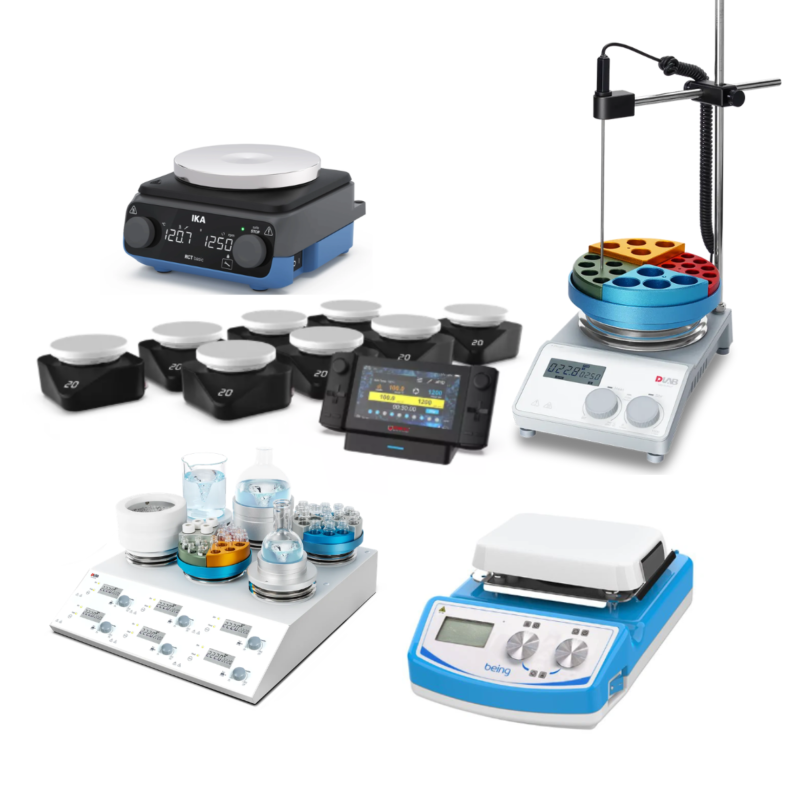
Top-Plate Material Physics: The Foundational Decision Affecting Every Aspect of Performance
Before comparing brands or models, evaluate the top-plate material, as it fundamentally dictates thermal transfer efficiency, temperature uniformity, chemical compatibility, maximum safe operating temperature, visibility during reactions, resistance to mechanical and thermal stresses, ease of cleaning, and overall lifespan.
Ceramic (Glass-Ceramic / Pyroceram):
- Primary Applications: High-temperature organic synthesis and reflux (350°C to 500°C+), handling highly corrosive strong acids and bases, high-visibility titrations and colorimetric assays, and workflows where observing color changes, precipitates, or phase transitions is essential.
- Physics & Heat Transfer Details: Ceramic functions as a thermal insulator across its surface, generating a more localized hot zone directly above the heating element. This can create beneficial temperature gradients in some setups but requires careful vessel placement for uniformity. The bright white surface provides outstanding visual contrast for clear observation of reactions without additional lighting.
- Chemical & Durability Properties: Superior resistance to chemical attack from aggressive reagents, making it easy to maintain a contamination-free surface. However, it is brittle and sensitive to thermal shock (e.g., splashing ice-cold liquid onto a white-hot plate) or heavy physical impacts, which may induce micro-fractures over time.
- Pros, Cons & Practical Guidance: Excellent for precision high-heat work but demands careful handling and avoidance of rapid temperature cycling. In labs, pair with external probes to manage any gradients. Many users in corrosive environments report years of reliable service when protocols are followed.
Aluminum (Anodized or Ceramic-Coated):
- Primary Applications: High-throughput screening and parallel experiments requiring rapid heat-up, workflows demanding perfectly uniform edge-to-edge heating, robust multi-user labs prone to accidental impacts, viscous solution mixing, and life science applications sensitive to hot spots.
- Physics & Heat Transfer Details: Aluminum’s high thermal conductivity enables exceptionally fast and uniform temperature distribution across the entire plate surface, often achieving target temperatures in minutes with minimal gradients (±5–10°C typical). This supports efficient energy use and consistent results across different vessel positions.
- Chemical & Durability Properties: Immune to thermal shock cracking and more forgiving under mechanical stress. The ceramic coating adds chemical resistance, but scratches or wear can expose the underlying metal to pitting from corrosives.
- Pros, Cons & Practical Guidance: Faster response times and better uniformity make it ideal for time-sensitive or large-batch work. Monitor coating integrity in harsh chemical environments and consider replacement schedules. Preferred in biochemistry for avoiding localized overheating that damages proteins or cells.
Decision Framework for Buyers: Audit your dominant applications, chemical types, volume ranges, and handling conditions. For mixed-use Bangladeshi labs, ceramic-coated aluminum often provides the optimal balance. Request plate size (common 10×10 cm to 20×20 cm), max temperature ratings, and uniformity data from suppliers like FSM.
Detailed Global Manufacturer Profiles & Segment Mapping
The market includes premium brands for regulated high-stakes work, mid-tier for balanced reliability, and value brands for cost-sensitive high-volume needs. Profiles below detail strengths, popular models (where applicable), ideal use cases, and key considerations from user and procurement viewpoints.
- IKA (Germany): Global leader emphasizing high-torque industrial mixing, closed-loop process automation, and compliance with strict GLP/GMP standards. Popular models like the RCT series and C-MAG HS feature advanced PID calibration, durable brushless motors, precise speed/temperature control, and robust safety interlocks. Best for demanding industrial chemistry, long-duration unattended operations, and automation integration. Higher capital cost is justified by longevity, low maintenance, and elite performance under viscous loads; budget separately for accessories such as PT1000 temperature probes and protective stands.
- Thermo Scientific (USA): Excels in heavy-duty, long-lifecycle institutional and research laboratory environments. The Cimarec and SuperNuova series are praised for consistent thermal output, excellent plate uniformity, and rugged construction that withstands years of heavy use. Ideal for core facility labs and pharma QC where reliability is non-negotiable. Internal designs may route out-of-warranty servicing through specialized channels.
- DLAB Scientific (USA/China/Turkey/Malaysia): Provides an outstanding balanced price-to-performance ratio for mainstream industrial, clinical, and research testing. Features stable microprocessor controls, highly responsive digital displays, reliable build quality, and lightweight composite chassis. Versatile for daily laboratory use without excessive cost.
- Four E’s Scientific (USA/China): Popular choice for large institutional procurements seeking digital safety indicators affordably. Features bright “Hot” warning lights and practical controls. External dials may exhibit wear under extremely heavy, continuous daily use.
- VELP Scientific (Italy): Optimized for space-constrained fume hoods and aggressive chemical vapor workflows. Units offer excellent chemical resistance, compact profiles, quiet operation, and reliable performance. Strong in European markets; plan procurement logistics for specialized components shipped from Italy.
- Scilogex (USA/China): Ideal for North American labs needing reliable local support, quick shipping, and immediate warranty handling. Core hardware is sourced through a strategic OEM/ODM relationship with DLAB, combining proven mechanics with accessible regional service.
- Benchmark Scientific (USA): Tailored for molecular biology, life science, and tissue culture setups with compact footprints and reliable digital controls. Temperature thresholds are optimized (around 380°C) for sensitive biological workflows, preventing unintended damage.
- Jeio Tech / Lab Companion (South Korea): Designed for pilot plants and scaling bench-scale chemistry. Heavy steel frames deliver excellent stability under heavy loads and larger volumes. Larger footprint requires planning bench space but offers robust performance.
- MTOPS (South Korea): Specialized in integration with heating mantles, deep flask heating, and multi-position testing configurations. Excels in applications requiring uniform deep heating; Asian-centric distribution may influence international parts availability.
- Being Instruments (USA/China): Focuses on straightforward workflows with modern touchscreen interfaces and simple safety interlocks. Streamlined multi-channel catalogs reduce complexity for routine operations.
- Lachoi (China): Optimized for mobile testing clinics and light-to-medium fluid mixing. Ultra-thin, fully enclosed tempered glass designs enhance protection against moisture and spills. Compact internal magnets best suited for lower-to-medium viscosity solutions.
- Lichen (China): Appropriate for culinary development, hobbyist chemistry, and basic solution preparation. Offers multi-segment programming and respectable high-temperature performance (up to 400°C). Users should carefully monitor stability when operating at maximum speed and heat simultaneously for extended periods.
- Joanlab (China): Strong for budget-conscious independent labs, high-throughput testing, and routine educational workflows. Impressive inclusions like digital LCD screens, timers, and brushless motors at accessible price points. Lightweight structural plastic housings; suitable for lighter-duty but frequent use.
- Ohaus (USA/China): Prioritizes proactive safety in multi-user academic, clinical, and shared facilities. The Guardian series incorporates SmartPresence sensors, advanced user-protection features, powerful motors for secure coupling, and digital interfaces. Suitable for environments with varying operator skill levels; brief orientation is recommended for the control panels.
- Biobase & Infitek (China): Well-positioned for competitive public tenders, large educational orders, and basic fluid blending needs. Provide simple, cost-effective solutions for high-volume purchases. Component consistency can vary slightly between manufacturing batches, typical for mass production.
Procurement Guidance: Match brand tier to your budget, compliance needs, and service infrastructure. FSM stocks popular models from all segments for quick delivery in Bangladesh.
Advanced Laboratory Q&A: Real-World Scenarios from Every Perspective
Researcher & Lab Technician Perspective
Q: Why does my liquid temperature keep overshooting the setpoint, ruining temperature-sensitive samples like enzymes or cell cultures?
Cause: Reliance on the internal plate sensor. The hotplate heats the plate rapidly to maximum to transfer heat through the vessel wall, creating thermal lag. By the time the liquid reaches the target, the plate is far hotter, causing overshoot upon equilibration.
Solution: Always use an external PT1000 or similar immersion probe placed directly in the liquid. This enables true closed-loop PID control, where the microprocessor dynamically adjusts power as the sample approaches the setpoint. Calibrate regularly and use insulated vessels for better efficiency. In practice, this can reduce overshoot from 10–20°C to under 1°C.
Q: What causes magnetic decoupling (spin-out) midway through a reaction, and how do I prevent it?
Cause: The magnetic coupling between the internal drive magnet and stir bar weakens due to increased viscosity (e.g., polymerization), volume loss from evaporation, high speeds, or weak economy magnets. Changes in solution properties during the reaction overpower the magnetic field.
Solution: Select units with high-coercivity Samarium-Cobalt or NdFeB magnets and powerful brushless motors for steady torque. Start at low RPM and ramp gradually. Use appropriately sized stir bars and reduce speed if viscosity rises. For extreme cases, switch to overhead mechanical stirrers. Test coupling with your specific solutions beforehand.
Q: Can I safely heat flammable solvents like ether, hexane, or acetone?
Cause: Brushed motors and relays can produce sparks. Vapors can enter the housing and ignite.
Solution: Use ATEX-certified or fully sealed sparkless brushless motor models from premium brands. Always operate in a certified fume hood with proper ventilation. Never use open containers for volatiles; consider reflux setups. Monitor for spills and have fire suppression ready.
Q: How do I achieve uniform mixing in viscous or heterogeneous mixtures?
Additional Tips: Use egg-shaped or cross stir bars for better vortex in round flasks. Ensure flat vessel bottoms and level placement. For very thick media, combine with gentle heating.
Procurement Officer & Laboratory Buyer Perspective
Q: When is an inexpensive analog unit sufficient versus investing in an expensive digital one?
Analog: Acceptable for simple, non-critical tasks like dissolving buffers, preparing saline, general education, or routine mixing where exact repeatability is not required. They use basic dials and are cheaper with fewer electronics to fail.
Digital: Mandatory for GLP/GMP regulated environments, precise temperature ramping/profiling, unattended overnight runs, data logging for audits, and applications needing ±0.1°C or ±1 rpm accuracy. Microprocessors provide continuous adjustment and alarms. Calculate ROI based on sample value and compliance risks.
Q: What safety certifications and features should I verify in institutional bids or purchases?
Answer: Look for CE, UL, CSA, TUV, or equivalent. For flammable work, demand explosion-proof ratings. Prioritize models with over-temperature cutoffs, hot surface warnings, spill channels, grounded plugs, and emergency stops. Request third-party test reports and local 220V validation.
Q: How do I calculate total cost of ownership (TCO) beyond purchase price?
Answer: Factor energy consumption, expected lifespan (brushless vs brushed), spare parts cost, service availability in Bangladesh, downtime impact, and accessory needs. Premium units often have lower TCO over 5+ years.
Distributor & Scientific Seller Perspective
Q: What is the leading cause of warranty claims, and how can we minimize them for customers?
Primary Cause: Liquid ingress through seams into electronics, causing board failures or short circuits.
Prevention: Recommend and demonstrate models with raised control panels, sealed membranes, drainage channels and proper user training on spill response. Provide protective silicone mats or films as add-ons.
Q: How does motor type influence product shelf-life, reliability, and warranty risk?
Answer: Brushed DC motors rely on carbon brushes that wear out after 1–3 years of heavy use, increasing noise, failure rates, and claims. Brushless DC (BLDC) motors eliminate friction points, offering quieter operation, longer life (often 5–10+ years), better efficiency, and significantly lower warranty exposure – a key selling point for your inventory management.
Additional Q&A for Manufacturers: Focus on improving magnet strength, user interface simplicity, and integration with lab software.
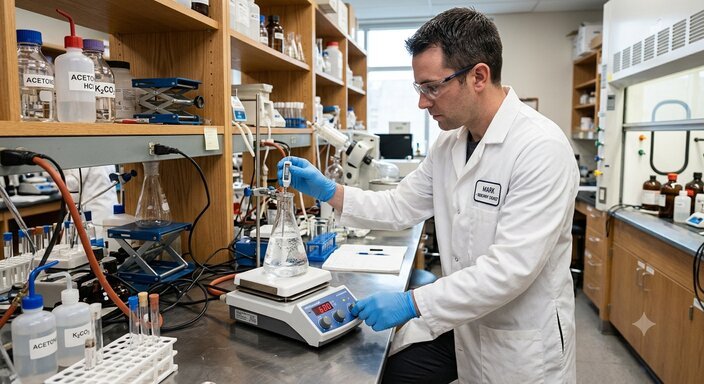
Application-Specific Selection Matrix
Analytical Chemistry & Quality Control
- Workload: Reagent prep, titrations, buffer formulation.
- Recommendation: Ceramic or ceramic-coated aluminum plate for visibility and corrosion resistance. Digital controls with ±0.1°C accuracy and external probe port.
- Example Specs: 100–1500 rpm, up to 400°C, 5–10L capacity. Brands: Corning, IKA, Ohaus.
Organic Synthesis & Polymerization
- Workload: Reflux, high-temp reactions, viscous mixtures.
- Recommendation: Pure ceramic for high heat or robust aluminum. High-torque BLDC motor, timers, auto-reverse, independent safety circuits.
- Example Specs: 50–2000 rpm, 350–500°C, strong coupling for gels.
Life Sciences, Biochemistry & Microbiology
- Workload: Media preparation, enzyme work, biological buffers.
- Recommendation: Uniform aluminum plate to avoid hot spots. Low-speed stability (30–200 rpm), easy-clean housing.
- Example Specs: Precise low RPM control, chemical-resistant surfaces.
High-Throughput Screening & Industrial Scale-Up
- Workload: Multiple samples or large volumes (up to 20L+).
- Recommendation: Multi-position aluminum or heavy industrial plates. Synchronized digital controls, high-torque assemblies.
- Example Specs: Multi-channel, heavy load bearing.
Additional Applications: Food testing (uniform mild heating), environmental analysis (corrosive samples), education (analog/digital value models).
The Critical Technical Gap: Understanding Drive Magnet Topologies
Buyers often focus only on motor power/RPM, ignoring coercivity (resistance to demagnetization under heat and load).
Torque Retention Table (Approximate Performance Under Load)
| Viscosity (cP) | Samarium-Cobalt / NdFeB (Premium) | Alnico / Ferrite (Economy) |
|---|---|---|
| 1 cP (Water-like) | Excellent (100%) | Excellent (100%) |
| 500 cP (Oil) | Excellent (95–100%) | Moderate (60–70%) |
| 1000+ cP (Gels/Polymers) | Strong (80–95%) | Poor (10–30%, frequent decoupling) |
Premium magnets maintain coupling through thick-walled vessels and high temperatures. Economy magnets lose strength quickly, leading to spin-outs. Recommendation: For viscous or variable reactions, invest in premium; test in your conditions.
Operational Troubleshooting Checklist & Best Practices
Pre-Run Checklist:
- Verify flat-bottom vessel in full contact; avoid warped glassware.
- Select stir bar length ~1/3 to 2/3 of vessel diameter.
- Level the unit; keep cords/probes away from hot surfaces.
- Use external probe for precision.
- Start at low speed/heat and ramp up.
Troubleshooting Common Issues:
- No heat/stir: Check power, connections, fuses.
- Uneven heating: Clean plate, improve contact.
- Spin-out: Adjust speed, bar, or upgrade magnet.
- Noise/vibration: Level, check balance.
- Error codes: Consult manual or FSM support.
Maintenance Schedule: Daily visual/spill check; weekly cleaning; monthly calibration; annual professional service for heavy use.
Comprehensive Buying Guidance Framework
Step-by-Step Process:
- Define needs (volume, temp, viscosity, compliance).
- Set budget and TCO.
- Compare specs using this guide.
- Request demos/samples from suppliers like FSM.
- Evaluate service network (critical in Bangladesh).
- Review certifications and user reviews.
- Purchase with accessories and training.
Bangladesh-Specific: Ensure 220V, humidity-resistant designs, local warranty, and import compliance.
Accessories, Future Trends, Case Studies & Long-Term Value
Key Accessories: Assorted PTFE stir bars, external probes, stands/clamps, protective covers, data cables.
Future Trends: IoT-enabled monitoring, AI-optimized PID, greener energy-efficient models, multi-functional units.
Case Studies: University lab improved reproducibility with DLAB/IKA/Ohaus magnetic hotplate stirrer ; pharma QC reduced failures with IKA/FourE’s/LACHOI ceramic models.
Conclusion: Use this guide as your ongoing reference. For hands-on help, product demos, or customized solutions in Bangladesh, visit fsm.com.bd or contact Federal Scientific Mart today. We support all stakeholders in achieving reliable, safe, and efficient laboratory operations.
This complete guide is designed for practical use – bookmark, share, and apply it directly in your workflow.
(2026 Edition.Copyright © Federal Scientific Mart)
What factors should researchers consider when selecting a magnetic hotplate stirrer for laboratory experiments involving different types of solutions?
When selecting a magnetic hotplate stirrer for different solution types, researchers should evaluate five key factors:
Top-Plate Material: Use ceramic for aggressive acids, strong bases, and high-heat reactions (superior chemical resistance). Use ceramic-coated aluminum for fast heat-up and uniform thermal transfer across the surface.
Viscosity & Torque: Low-viscosity liquids (aqueous buffers) work with standard motors, but thick/viscous solutions (oils, polymers) require high-torque Brushless DC motors and strong, high-coercivity magnets (e.g., Rare Earth/Neodymium) to prevent magnetic decoupling (stir bar spin-out).
Temperature Control & Precision: For sensitive biological/chemical solutions where thermal overshoots damage samples, use an external PT1000 temperature probe directly immersed in the liquid for precise PID closed-loop feedback.
Volume Capacity & Stir Bar Matching: Match the unit’s volume rating and select a stir bar shape/length tailored to your flask geometry and fluid density to maintain smooth, consistent mixing.
Safety Features: Look for IP21/IP42 ingress protection against chemical spills, an independent over-temperature cutoff circuit, and a visible “HOT” warning indicator to protect operators when heating volatile solvents.